Top 10 Smart Home Construction Trends in India for 2026
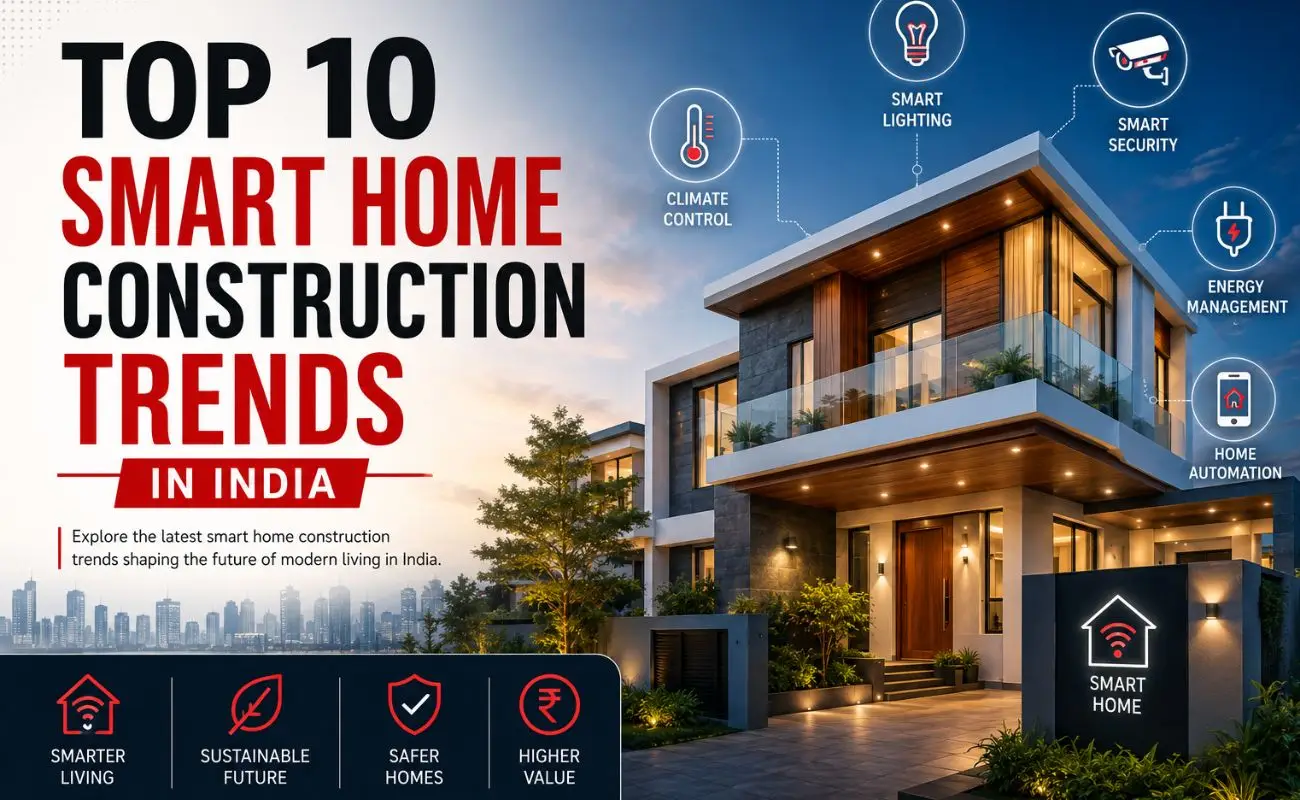
Top 10 Smart Home Construction Trends in India: Innovate Your Living Space
The way people build and experience homes is changing rapidly across India. Modern homeowners no longer look for a house that simply provides shelter. They want a living space that offers convenience, security, sustainability, and intelligent functionality. This shift has accelerated the adoption of smart home construction, where advanced technologies are integrated into residential projects from the very beginning.
From automated lighting systems and intelligent security solutions to energy-efficient infrastructure and connected appliances, smart homes are transforming the Indian housing sector. As technology becomes more accessible, homeowners are increasingly seeking future-ready residences that align with evolving lifestyles and environmental goals.
Leading organizations within the construction sector, including innovative firms such as Webuild LLP, are contributing to this transformation by embracing modern building methodologies and technology-driven construction practices that support smarter living environments.
In this blog, we explore the top smart home construction trends in India, their benefits, challenges, and how they are shaping the future of residential construction.
What Is Smart Home Construction?
Smart home construction refers to the process of designing and building homes with integrated technologies that enable automation, remote monitoring, improved energy management, and enhanced security.
Unlike conventional construction, smart home construction considers technological infrastructure during the planning stage itself. This ensures seamless integration of various smart systems rather than adding them later as separate installations.
A smart home may include:
- Automated lighting systems
- Voice-controlled devices
- Smart security solutions
- Intelligent climate control
- Energy monitoring systems
- IoT-enabled appliances
- Smart water management technologies
The objective is to create a connected ecosystem where multiple devices communicate efficiently to improve the homeowner's quality of life.
Why Smart Home Construction Is the Future of Indian Housing
India's housing market is witnessing significant changes driven by urbanization, technological advancement, and changing consumer expectations.
Several factors are contributing to the rise of smart home construction:
Increased Technology Adoption
Smartphones, high-speed internet, and connected devices have become a part of everyday life. Homeowners increasingly expect similar convenience within their living spaces.
Growing Focus on Sustainability
Energy conservation and environmental responsibility are becoming priorities for modern households. Smart technologies help reduce resource consumption while maintaining comfort.
Enhanced Security Requirements
With increasing awareness regarding residential safety, intelligent surveillance and monitoring systems have become highly desirable features.
Long-Term Cost Savings
Although initial investments may be higher, smart homes often reduce utility expenses through efficient energy and water management.
Rising Property Value
Future-ready homes equipped with intelligent technologies tend to attract more buyers and command stronger market value.
Smart Home Construction vs Traditional Home Construction
Traditional homes are designed primarily around structural requirements and basic utility services. Technology integration is often treated as an afterthought.
Smart home construction takes a fundamentally different approach.
Traditional homes generally rely on manual operation of lighting, appliances, security systems, and climate control. Smart homes automate many of these functions through connected devices and centralized control systems.
Some notable differences include:
- Automated operations versus manual controls
- Enhanced energy efficiency versus standard consumption patterns
- Real-time monitoring versus limited visibility
- Integrated security versus conventional protection methods
- Future-ready infrastructure versus technology retrofitting
As India's residential sector evolves, smart construction offers greater flexibility and adaptability for future technological advancements.
Top 10 Smart Home Construction Trends in India
1. AI-Powered Home Automation
Artificial Intelligence is becoming a major component of modern smart homes.
AI-powered systems learn user preferences and automatically adjust home settings based on behavior patterns. These systems can optimize lighting, temperature, security, and appliance usage without constant manual intervention.
For example, AI can automatically lower energy consumption during peak hours or adjust room temperatures according to occupancy patterns.
Benefits
- Personalized home experiences
- Reduced energy consumption
- Improved comfort levels
- Predictive maintenance alerts
- Enhanced operational efficiency
As AI technologies continue to advance, they are expected to become standard features in premium residential projects across India.
2. Voice-Controlled Smart Homes
Voice assistants have changed how people interact with technology.
Modern smart homes increasingly integrate voice-controlled systems that allow residents to manage various functions using simple commands.
Homeowners can control:
- Lighting
- Curtains
- Air conditioning
- Entertainment systems
- Security devices
- Smart appliances
The convenience offered by voice-enabled technologies makes them particularly attractive for families, elderly residents, and individuals seeking accessible home environments.
Advantages
- Hands-free operation
- Improved accessibility
- Faster control of devices
- Greater user convenience
- Enhanced living experience
Voice technology is becoming a key feature in modern residential construction projects throughout India.
3. Smart Security Systems
Security remains one of the primary reasons homeowners invest in smart technologies.
Modern construction projects increasingly incorporate advanced security infrastructure, including:
- Smart surveillance cameras
- Video doorbells
- Motion detection systems
- Biometric access controls
- Remote monitoring solutions
These technologies allow homeowners to monitor their property from virtually anywhere through mobile applications.
Key Benefits
- Real-time security alerts
- Remote access monitoring
- Improved intrusion detection
- Better visitor management
- Enhanced family safety
As urban populations grow, smart security systems continue to gain importance in residential developments.
4. Energy-Efficient Smart Homes
Energy efficiency has become a major focus within the construction industry.
Smart homes utilize intelligent systems to optimize energy usage while maintaining occupant comfort.
Common technologies include:
- Smart thermostats
- Automated lighting controls
- Energy monitoring platforms
- Solar integration systems
- Occupancy sensors
These systems help homeowners understand consumption patterns and make informed decisions regarding energy use.
Advantages
- Lower electricity bills
- Reduced environmental impact
- Improved resource utilization
- Sustainable living practices
- Increased property attractiveness
Energy-efficient smart homes represent one of the fastest-growing trends in Indian residential construction.
5. IoT-Connected Appliances
The Internet of Things (IoT) enables appliances and devices to communicate with each other through a connected network.
Modern homes increasingly feature:
- Smart refrigerators
- Connected washing machines
- Intelligent cooking appliances
- Smart air purifiers
- Automated cleaning devices
These appliances provide improved convenience, performance monitoring, and remote operation capabilities.
Applications
- Remote device management
- Usage tracking
- Automated maintenance notifications
- Enhanced efficiency
- Improved user convenience
IoT integration is helping create highly connected residential ecosystems.
6. Smart Water Management Systems
Water conservation is becoming increasingly important, particularly in regions facing resource challenges.
Smart water management systems help homeowners monitor and optimize water consumption.
These systems often include:
- Leak detection sensors
- Smart irrigation controls
- Water quality monitoring devices
- Consumption analytics platforms
Benefits
- Reduced water wastage
- Early leak detection
- Lower utility costs
- Improved sustainability
- Better resource management
Smart water technologies are expected to become essential components of responsible residential development.
7. Home Health and Wellness Technologies
Health-focused living environments are gaining popularity among homeowners.
Smart homes increasingly integrate technologies designed to improve indoor wellness and comfort.
Examples include:
- Air quality monitoring systems
- Smart ventilation controls
- Circadian lighting systems
- Temperature optimization technologies
- Humidity management solutions
Advantages
- Improved indoor air quality
- Better sleep conditions
- Enhanced comfort
- Reduced environmental stressors
- Healthier living environments
These solutions align with growing awareness regarding health and well-being within residential spaces.
8. Sustainable Smart Building Materials
Modern homeowners are increasingly seeking environmentally responsible construction solutions.
Smart home projects often utilize innovative materials that contribute to energy efficiency and sustainability.
Popular options include:
- High-performance insulation materials
- Reflective roofing systems
- Energy-efficient glazing
- Recycled construction products
- Sustainable wood alternatives
Benefits
- Improved thermal performance
- Lower energy requirements
- Reduced environmental impact
- Enhanced durability
- Long-term cost savings
Sustainable materials complement smart technologies to create environmentally responsible homes.
9. EV Charging Infrastructure in Homes
The growing popularity of electric vehicles is influencing residential construction practices.
Homeowners increasingly seek dedicated EV charging facilities within their properties.
Modern residential projects now consider:
- Home charging stations
- Future charging upgrades
- Smart energy management integration
- Solar-powered charging systems
Advantages
- Convenient vehicle charging
- Increased property value
- Support for sustainable transportation
- Future readiness
- Improved energy efficiency
As electric vehicle adoption grows in India, integrated charging infrastructure is expected to become a standard requirement.
10. Integrated Smart Home Ecosystems
One of the most significant trends is the development of fully integrated smart home ecosystems.
Rather than operating independently, various systems communicate through centralized platforms.
Integrated ecosystems can manage:
- Security systems
- Lighting controls
- Climate management
- Entertainment devices
- Energy monitoring
- Smart appliances
Benefits
- Unified control experience
- Enhanced efficiency
- Improved convenience
- Better automation capabilities
- Simplified management
This holistic approach represents the future of smart residential living.
Key Benefits of Smart Home Construction
Smart home construction offers numerous advantages beyond convenience.
Improved Efficiency
Automated systems optimize resource usage and reduce waste.
Enhanced Security
Advanced monitoring and access controls improve residential safety.
Greater Comfort
Personalized environments create better living experiences.
Sustainability
Smart technologies support environmentally responsible lifestyles.
Future Readiness
Homes remain adaptable to emerging technological developments.
Additional benefits include:
- Lower utility costs
- Better property valuation
- Increased operational control
- Remote monitoring capabilities
- Improved maintenance management
How to Plan a Smart Home Construction Project
Building a smart home requires strategic planning from the earliest stages.
Define Your Objectives
Identify which smart features align with your lifestyle and future needs.
Establish a Budget
Determine how much investment will be allocated to smart technologies.
Select Compatible Systems
Choose technologies that can integrate seamlessly with each other.
Prioritize Infrastructure
Ensure adequate wiring, networking, and connectivity provisions are included during construction.
Focus on Scalability
Future-proof your home by allowing room for technology upgrades.
Work with Experienced Professionals
Collaborating with an experienced Construction Company in India can help ensure proper implementation of smart technologies.
Common Challenges in Smart Home Construction
While smart homes offer significant advantages, certain challenges must be addressed.
Technology Compatibility
Different devices may not always integrate effectively.
Initial Investment Costs
Advanced technologies often require higher upfront expenditures.
Cybersecurity Risks
Connected systems require proper protection against digital threats.
Internet Dependence
Many smart features rely heavily on stable internet connectivity.
Maintenance Requirements
Regular updates and monitoring are necessary to ensure optimal performance.
Practical planning and professional guidance can help overcome these challenges.
Cost of Smart Home Construction in India
The cost of smart home construction varies depending on multiple factors.
Important considerations include:
- Home size
- Level of automation
- Technology selection
- Security infrastructure
- Energy management systems
- Smart appliance integration
- Sustainability features
Basic smart features may involve relatively modest investments, while fully integrated ecosystems require larger budgets.
Rather than focusing solely on initial expenses, homeowners should evaluate long-term savings, efficiency gains, and enhanced property value.
Future of Smart Home Construction in India
The future of smart home construction appears exceptionally promising.
Several emerging developments are expected to influence the market:
- Advanced AI integration
- Predictive home management systems
- Smart energy grids
- Enhanced IoT connectivity
- Sustainable construction innovations
- Intelligent urban infrastructure
As technology becomes more affordable and consumer awareness continues to grow, smart homes are likely to become mainstream rather than premium offerings.
The role of every forward-thinking Construction Company in India will increasingly involve integrating technology, sustainability, and intelligent design into residential developments.
Frequently Asked Questions
What is smart home construction?
Smart home construction involves building homes with integrated technologies that enable automation, energy efficiency, security, and remote management.
Are smart homes expensive to build in India?
The cost depends on the level of automation, technology selection, and project size. Basic smart features can be implemented at reasonable costs, while advanced systems require higher investment.
Which smart home feature is most popular in India?
Smart security systems, voice-controlled automation, and energy management solutions are among the most widely adopted features.
Can smart home technologies reduce electricity bills?
Yes. Smart lighting, energy monitoring systems, and intelligent climate control can significantly improve energy efficiency.
Why should I choose an experienced Construction Company in India for a smart home project?
Experienced construction professionals can ensure proper planning, technology integration, infrastructure readiness, and long-term scalability for smart home developments.
Conclusion
Smart home construction is reshaping the future of residential living in India. From AI-powered automation and advanced security systems to sustainable materials and integrated ecosystems, these innovations are creating homes that are safer, smarter, and more efficient.
As homeowner expectations evolve, future-ready construction practices will become increasingly important across the Indian housing sector. Industry contributors such as Webuild LLP represent the growing movement toward modern construction approaches that combine quality building practices with technological innovation to support the next generation of intelligent homes.
Investing in smart home construction today is not merely about adopting new technology; it is about creating adaptable living spaces prepared for the future.
Recent Posts
August 03, 2026


July 15, 2026
Get In Touch